
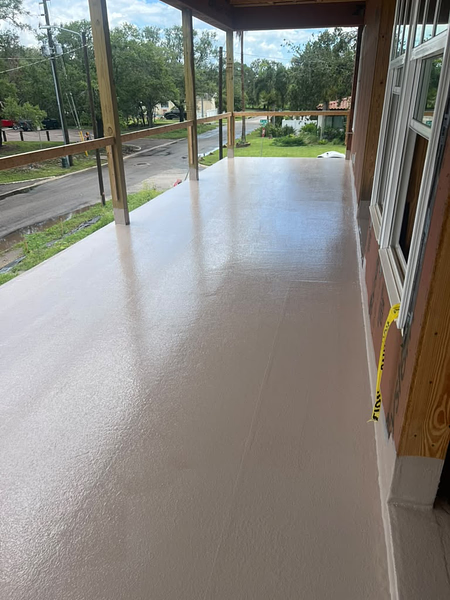
The two terms get used interchangeably, and they should not be. Knowing which one your project needs changes both the finish and the price.
Ask three contractors about gel coat and top coat and you may get three different answers. The confusion is understandable — both are pigmented resin surfaces, both go over a fiberglass laminate, and in casual conversation people use the words interchangeably. Technically they are not the same thing, and the difference is worth understanding before you approve a quote.
Gel coat is a pigmented resin applied as the first layer in a mould, against the mould surface, before any mat or resin goes in. When the part is pulled, that gel coat is the outermost visible face. It is what gives a boat hull or a moulded shower base its hard, glossy, factory finish. Critically, it cures against the mould with no air contact, which is what allows it to cure fully hard and glossy.
Top coat is essentially gel coat resin with wax added. That wax rises to the surface during cure and seals out the air, letting the resin cure hard even when it is the last layer applied and exposed to atmosphere. That is exactly the situation on a deck laminated in place — there is no mould, so the final layer is open to the air. Without the wax, it would stay tacky.
So on your balcony or deck, what goes down last is almost always a top coat, even though nearly everyone in the trade calls it gel coat. The material is doing the same job — pigment, UV protection, abrasion resistance — through a different cure chemistry suited to being applied in the open.
Where genuine gel coat comes back into the picture is restoration work. When we resurface a chalked or scratched fiberglass component, we can spray gel coat and then cut and buff it mechanically to bring up the gloss, rather than relying on a wax-sealed cure. That is how you get a truly high-shine finish on an existing surface, and it is why gel coat restoration is a finishing process as much as an application one.
The practical takeaway for a homeowner: ask what the final wearing surface is, whether it is UV-stable, whether it includes non-skid, and how it is maintained. Those four answers tell you far more about what you are buying than which of the two words appears on the quote.